News
Delta Flight DL275 Diverted to LAX: Causes, Impact, and Passenger Updates

Introduction
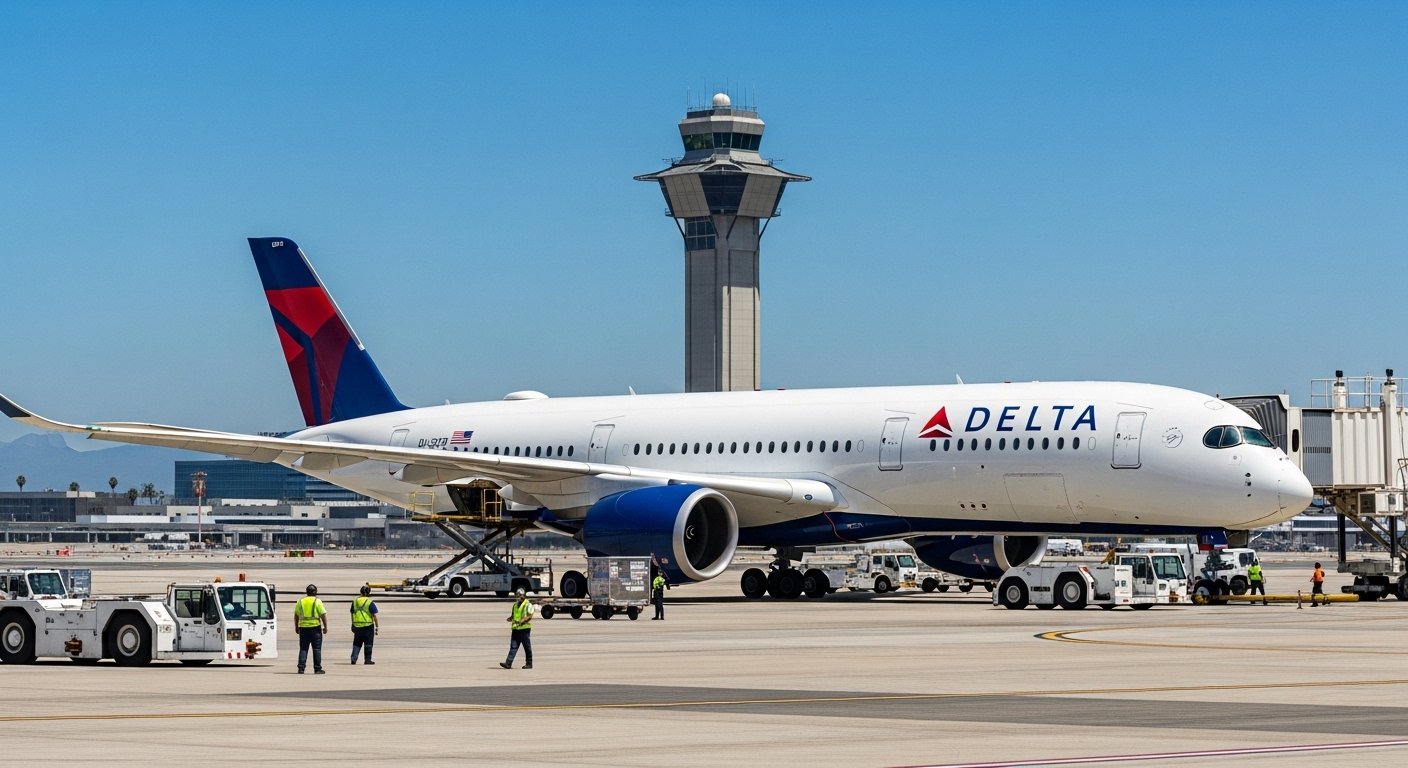
Delta Flight DL275’s unexpected diversion to Los Angeles International Airport (LAX) in late May 2025 disrupted travel plans for hundreds of passengers and created major questions across aviation news and social channels. Originally scheduled as a long‑haul transpacific service from Detroit to Tokyo, the flight was forced to divert mid‑air due to a technical issue that impacted a critical aircraft system — forcing the pilots to take precautionary action well before reaching its destination. In this article, we’ll explain what went wrong, why the flight was rerouted, how Delta handled the situation, why LAX was chosen, and what passengers experienced during this unexpected detour — all based on verified incident reports.
What Happened to Delta Flight DL275?
Delta Flight DL275 departed Detroit (DTW) bound for Tokyo Haneda (HND) on May 27, 2025, with hundreds of passengers on board. Shortly after cruising at high altitude over the North Pacific Ocean — approximately 620 nautical miles southwest of Anchorage, Alaska — the flight crew identified a technical anomaly involving one of the aircraft’s critical systems.
Although the exact alert varied across early reports, aviation tracking and multiple sources indicate that the aircraft’s engine anti‑ice system malfunctioned — triggering cautionary safety protocols and prompting the crew to coordinate with air traffic control and Delta’s operations center.
Rather than continue toward Tokyo with a compromised system, the pilots elected to divert to Los Angeles International Airport (LAX) — a major international airport with the infrastructure needed to support this aircraft type and the technical issue at hand.
Why Delta Flight DL275 Diverted LAX
Primary Cause: Engine Anti‑Ice System Failure
The most widely reported and credible explanation for the diversion was a malfunction in the aircraft’s engine anti‑ice system. This system prevents ice build‑up on engine components at high altitude — a vital safety mechanism on transpacific routes where temperatures may plunge far below freezing.
When sensors indicated that the anti‑ice system on one of the Rolls‑Royce Trent XWB engines was not functioning within safe parameters, the crew followed strict aviation protocols that recommend precautionary diversion rather than risk degraded performance over remote oceanic airspace. Continuing without adequate ice protection could lead to ice accumulation, disrupted airflow, engine performance issues, or increased risk of failure — even if the aircraft was still technically controllable.
Why Not Divert to a Closer Airport?
Although airports in Alaska or the Pacific Northwest are geographically closer, Delta’s decision to divert to LAX accounted for several operational and safety factors:
- Comprehensive Maintenance Facilities: LAX houses major aircraft maintenance hubs, including technical support for Airbus A350‑900s and Rolls‑Royce engines.
- 24/7 Specialists and Parts Availability: Engine component experts and spare parts for the specific system involved were more readily accessible at LAX.
- Passenger Handling and Connectivity: As a primary U.S. international gateway, LAX permits efficient processing, accommodations, and rebookings.
These priorities — safety, technical support, and minimizing passenger disruption — explain why the diversion targeted a longer flight path rather than a closer but insufficient alternative.
Was the Landing an Emergency?
Although some initial speculation online suggested an emergency, official reports clarified that DL275’s landing at LAX was precautionary, not an emergency in the strict sense. No imminent danger — such as fire, smoke in the cabin, or engine failure — was reported by credible sources, and emergency services on the ground remained on standby rather than actively responding to a crisis.
This distinction matters: pilots and airlines use precise terminology. A precautionary diversion prioritizes safety while minimizing alarm — and that is what occurred with DL275.
Impact on Flight Path and Duration
The change in course added hundreds of nautical miles to the flight path as DL275 turned southward toward LAX. Estimates place the landing time at approximately 01:08 AM local time on May 28, 2025, several hours after the crew detected the system issue.
Though the flight did not continue to Tokyo, the aircraft safely touched down at LAX’s Runway 06R, where ground crews were prepared to handle the diversion and coordinate maintenance, passenger care, and onward travel arrangements.
Passenger Experience and Airline Response
Communication and Safety Protocols
Passengers aboard DL275 reported updates from flight crews explaining that a system anomaly had arisen and that safety was the top priority. Clear, calm communication helped reduce anxiety among travelers unfamiliar with diversion procedures.
Post‑Landing Logistics
Once on the ground, Delta’s operations team assisted with:
- Disembarking and directing passengers to customer service desks
- Arranging hotel accommodations, meals, and transportation
- Rebooking connections to the original destination or alternative routes
Ground support teams from Delta worked throughout the night at LAX to handle logistics and provide immediate support.
Technical Insight: Engine Anti‑Ice System Explained
The engine anti‑ice system plays a critical role in keeping ice from forming on external engine components — especially in cold, moist air at high cruising altitudes. It does this by routing warm bleed air from the engine’s compressor to key surfaces where ice might otherwise accumulate.
When this system fails or degrades, ice formation can:
- Reduce airflow into the engine
- Disrupt combustion and thrust
- Increase drag or vibration
- In extreme cases, cause partial engine stall or damage
Because these risks escalate rapidly in remote airspace, pilots will typically divert to a suitable airport rather than continue toward a distant destination under compromised conditions.
How Common Are Diversions Like This?
Flight diversions are uncommon — but not rare — in commercial aviation. They can stem from:
- Technical or mechanical issues
- Medical emergencies
- Weather or air traffic control instructions
- Security or passenger incidents
In each case, the airline’s crew and operations control decide whether to continue, divert, or return to origin based on safety protocols. In DL275’s case, technical safety was the determining priority.
Why This Matters for Travelers
For passengers, a diversion like this means:
- Delay or rescheduling of flights
- Possible loss of connections
- Accommodation needs for overnight stays
- Potential additional expenses (handled by airline policies)
But it also underscores a critical reality: safety always outweighs schedule or convenience in modern aviation. Pilots and crews are trained to make decisions that protect lives — even if it means unexpected detours.
FAQs
Q1: Was Delta Flight DL275 diverted due to an engine failure?
Not exactly. The aircraft did not suffer complete engine failure, but sensors detected an anti‑ice system issue affecting engine performance parameters — enough to justify a diversion as per safety protocols.
Q2: Did the diversion qualify as an emergency landing?
No. Aviation experts categorize the landing as a precautionary diversion rather than an emergency evacuation or urgent landing scenario.
Q3: Why was LAX chosen instead of a closer airport?
Delta selected LAX for its advanced maintenance facilities, engine specialist support, and excellent passenger handling capabilities.
Q4: Were any passengers injured?
Credible reports confirm that the diversion caused no injuries, and ground staff safely escorted passengers off the aircraft.
Q5: Will passengers receive compensation for the diversion?
Compensation policies vary by airline. Many travelers may receive accommodations, meal vouchers, and rebooking at no extra cost, but specific compensation depends on Delta’s terms and conditions.
Conclusion
The diversion of Delta Flight DL275 to LAX was an unexpected but professionally managed event rooted in sound aviation safety protocols. A malfunction in an essential engine anti‑ice system triggered a precautionary reroute, prioritizing the well‑being of passengers and crew over the continuation of the flight to Tokyo. Los Angeles International Airport — with its robust technical infrastructure — was the best choice to handle both the aircraft issue and passenger needs. While disruptions like this are frustrating for travelers, they reflect an aviation industry deeply committed to safety first.
Stay tuned for updates or official reports from Delta Air Lines and aviation authorities as they publish more detailed findings.



Delta Flight DL275 Diverted to LAX: Causes, Impact, and Passenger Updates

FintechZoom.com: Your Ultimate Guide to the Latest Fintech News, Trends, and Insights

Kelly Anne Welbes Abagnale: Life, Career, and Lesser‑Known Stories

Social Media Silent Scrollers Traits: Understanding the Hidden Audience Behind Every Post

BMWX4 Review 2026: Features, Luxury, and Performance You Need to Know

Wollmatten: The Ultimate Guide to Choosing, Caring, and Styling Wool Mats for Your Home
-
Social Media2 weeks ago
Social Media Silent Scrollers Traits: Understanding the Hidden Audience Behind Every Post
-
Blog2 weeks ago
BMWX4 Review 2026: Features, Luxury, and Performance You Need to Know
-
Lifestyle & Fashion2 weeks ago
Wollmatten: The Ultimate Guide to Choosing, Caring, and Styling Wool Mats for Your Home
-
 Celebrities2 weeks ago
Elizabeth Huberdeau: The Untold Story of John Cena’s Former Wife and Her Life Beyond the Spotlight
-
 Health2 weeks ago
Delta Fitness Authority: Your Ultimate Guide to Strength, Performance, and Total Body Transformation
-
 Lifestyle & Fashion2 weeks ago
Blazertje: How to Style This Trendy Jacket for Every Season and Occasion
-
 Digital Marketing2 weeks ago
Your Topics Multiple Stories: How to Transform Ideas into Engaging Content
-
 Technology2 weeks ago
Chromtex: Exploring Innovative Solutions in Textiles and Industrial Applications